
Utah's Expansive Soil & What It Does to Your Concrete
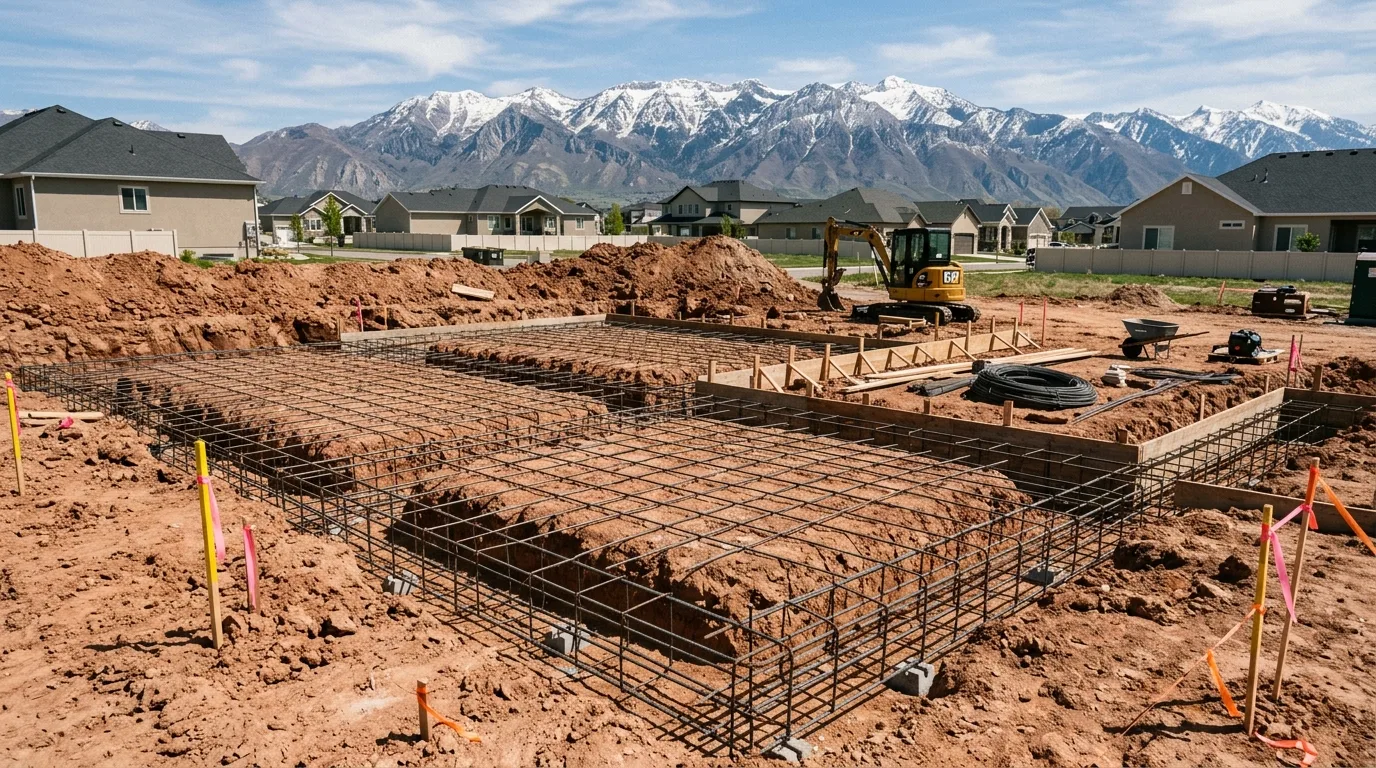
A concrete driveway or patio poured in Ogden faces a challenge that’s invisible at installation time but becomes obvious over the first 5–10 years: the soil beneath it moves. Weber County’s expansive clay soils swell when they absorb moisture from spring snowmelt and rainfall, then shrink and contract during Ogden’s hot, dry summers. That seasonal volume change — happening beneath every concrete slab poured without proper base preparation — creates cracking, settling, and surface failures that homeowners in the Lynn, Canyon Road, and East Central Ogden neighborhoods recognize all too well. This guide explains the soil problem, what it does to concrete, and what properly engineered installations do differently.
Ask Us About Soil-Appropriate Concrete Installation in Ogden
Free estimates include base preparation recommendations specific to your site's soil conditions — no generic quotes.
Why Weber County’s Soils Are Different
The Wasatch Front’s geological history has deposited expansive clay throughout the Ogden area. These clays — with Plasticity Index values that indicate significant volume-change potential — behave fundamentally differently from sandy or rocky soils when moisture content changes. When wet clay absorbs water, it swells. When it dries, it shrinks. The vertical movement from this swell-shrink cycle can reach 1–3 inches over the course of a year in soils with high clay content.
Concrete foundation Ogden failures and driveway cracking in the Lynn neighborhood’s pioneer-era properties reflect decades of this cycle. The soil beneath older concrete in these areas has been through 50+ seasonal swell-shrink cycles since original installation, and many of the slabs laid without modern base preparation have followed the soil’s movement — cracking along the tension zones and settling into the voids left when the soil contracted.
Weber County also includes areas with collapsible soils — alluvial deposits along the Weber River Parkway corridor and lower-elevation areas that appear stable under normal conditions but compress suddenly when saturated. Homes built in these zones before soil investigation became standard practice have foundations that settled unexpectedly during high-moisture seasons.
How Expansive Soil Damages Concrete Flatwork
Phase 1 — Wet season swelling: Spring snowmelt from the Wasatch Range saturates the soil beneath and around concrete slabs. The clay swells, creating upward pressure that lifts sections of the slab and widens any existing control joints or cracks. Differential swelling — when part of the slab receives more moisture than another — causes slabs to tilt rather than lift uniformly.
Phase 2 — Dry season shrinkage: Ogden’s summer temperatures (average high 91°F in July, with low annual precipitation of 13 inches) dry the soil beneath the slab. As the clay shrinks, it pulls away from the underside of the concrete, creating voids. These voids leave the concrete unsupported — a slab over a void is at high risk of cracking when loaded by vehicle weight.
Phase 3 — Void collapse and cracking: When a vehicle parks on an unsupported section over a void, the concrete cracks through the full depth. This is why cracking in Ogden driveways often appears first in the same locations year after year — the void is being reformed in the same spot each summer.
Phase 4 — Freeze-thaw acceleration: Any crack created by soil movement in fall becomes a water entry point during winter. Water infiltrates, freezes at Ogden’s January average low of 23°F, and expands the crack further. By spring, what was a 1/4-inch crack becomes a 3/4-inch gap.
Types of Soil Conditions Across Ogden
- Expansive clay (high Plasticity Index): Most prevalent in the East Central Ogden, Hillcrest-Bonneville, and Canyon Road neighborhoods. These soils are the primary driver of driveway and patio cracking in established Ogden residential areas.
- Collapsible alluvial soils: More common near the Weber River Parkway and lower-elevation areas. These soils may appear stable under vehicle loads until saturated. Foundation cracking in affected areas can occur suddenly after unusually wet periods.
- Corrosive soils: Certain Ogden areas have soils with chemical properties that degrade concrete and steel reinforcement over time. Sulfate-resistant cement is the standard mitigation for concrete placed in these conditions.
- Rocky/silty soils (foothill areas): Southeast Ogden’s foothill properties often have better-draining, less expansive soils — one reason premium concrete installation holds up better in these areas than in the clay-dominant flatlands.
Practical Implications for Ogden Concrete Projects
- Driveway installation in Canyon Road or Lynn: Expect deeper base preparation requirements. A 4–6 inch compacted aggregate base (instead of the 3-inch minimum in less expansive soil conditions) is standard practice for expansive clay sites.
- Patio near the foundation: Expansive soil movement adjacent to foundations can transmit stress to foundation walls. Patio drainage design must direct water away from the foundation to prevent soil saturation adjacent to structural elements.
- Concrete slab foundation for a garage or addition: Foundation depth below the frost line (30–36 inches in Ogden) is only part of the story on expansive clay — the footings also need to be sized and reinforced to resist the upward pressure from swelling soil.
- Retaining wall on a sloped lot: Expansive clay exerts significant lateral pressure on retaining walls. Properly designed drainage behind the wall is essential to prevent hydrostatic and clay-swell pressure from pushing the wall forward.
Get Soil-Smart Concrete Work in Ogden
Every Ogden Concrete Contractors estimate accounts for site-specific soil conditions — base preparation designed for your ground, not a national average.
What Properly Engineered Concrete Does Differently
The solution to Weber County’s expansive soil problem is not mysterious — it’s proper engineering that accounts for the known soil behavior. A properly designed concrete driveway Ogden installation on expansive clay includes:
- Deeper aggregate base: 4–6 inches of compacted crushed stone replaces the expansive soil immediately beneath the slab with non-expansive material that doesn’t swell or shrink.
- Controlled moisture during installation: Pre-wetting the soil sub-base to near-optimum moisture content before placing aggregate prevents the base from wetting up under the slab after installation and swelling unevenly.
- Adequate concrete thickness: 5-inch concrete on expansive clay better bridges the voids that form during dry cycles than 4-inch concrete.
- Control joints at closer spacing: On expansive soil, control joints spaced every 8–10 feet (rather than 12–15 feet) direct any stress cracking to planned locations before random fractures develop.
- Sealing: Preventing moisture entry into the concrete surface and sub-base dramatically reduces the seasonal moisture fluctuation that drives soil volume change beneath the slab.
Frequently Asked Questions
How do I know if my Ogden property has expansive clay soils?
Signs include: cracking in existing concrete that follows consistent diagonal patterns, door and window frames that stick or misalign seasonally, and cracks in the drywall near window corners that open in dry weather and close in wet weather. A geotechnical soil test can confirm soil type and Plasticity Index for any specific site.
Does expansive clay soil make concrete repairs pointless?
No — but it means the root cause must be addressed alongside the surface repair. Crack filling on a driveway with no base improvement will re-open the following cycle. Repair paired with drainage improvement and base stabilization can last 10+ years. Our concrete repair Ogden assessments always include the underlying cause, not just the surface symptom.
Do all Ogden neighborhoods have expansive soil problems?
No. Southeast Ogden’s foothill areas and some North Ogden properties have better-draining, less expansive soils. The flatland neighborhoods — particularly Lynn, East Central Ogden, and Canyon Road — have higher clay content. We assess site conditions during every free estimate.
Concrete Built for Ogden's Real Ground Conditions
Call Ogden Concrete Contractors at (888) 376-0955 — free estimate with soil-aware base preparation recommendations.
Related: