
Ogden Foundation Repair: Warning Signs Every Homeowner Must Know
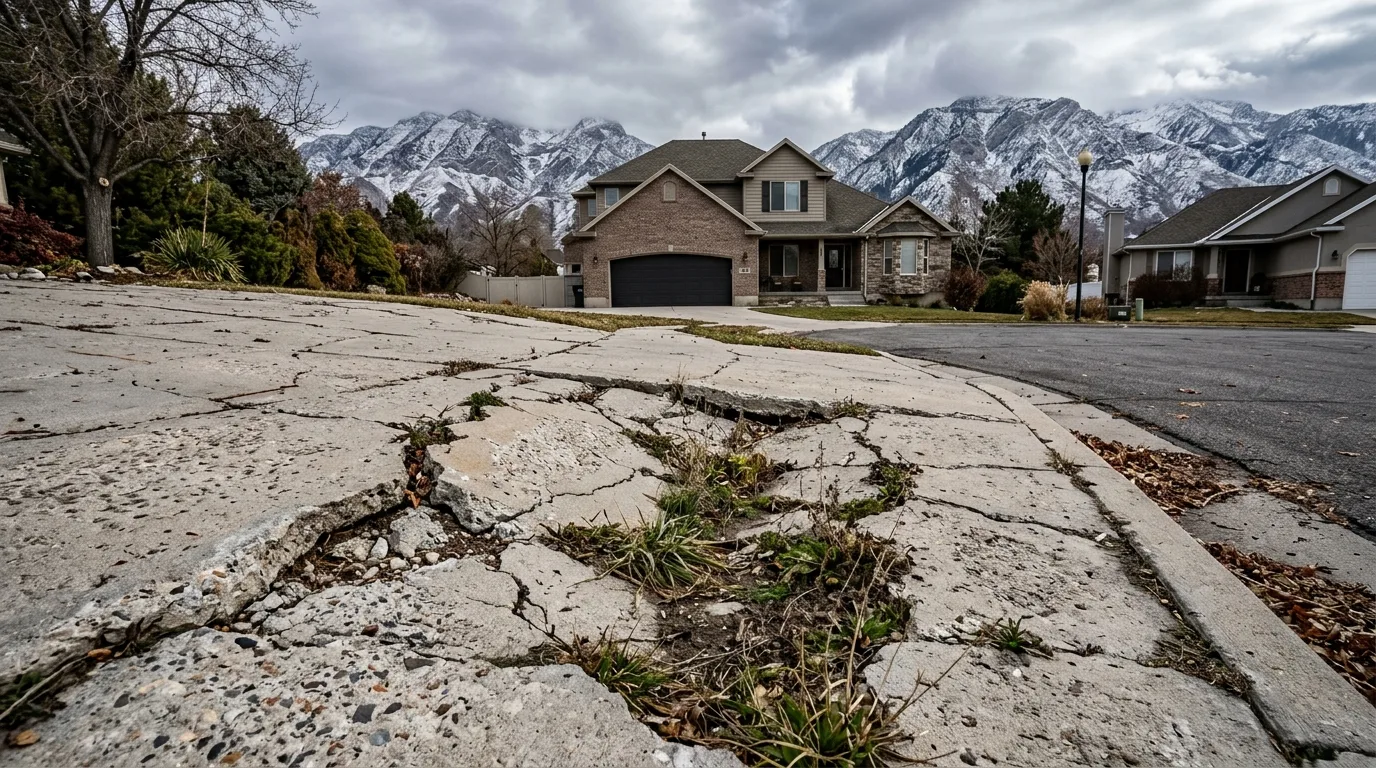
Your home’s foundation is the most consequential concrete structure on your property — and Weber County’s expansive clay soils and Wasatch Front geology make Ogden one of the more demanding foundation environments in the Intermountain West. Many Ogden homeowners first notice foundation problems not by looking at the foundation itself, but by observing what happens inside their homes: doors that suddenly won’t latch, windows that jam in their frames, cracks appearing in drywall near window corners. Recognizing these early warning signs and understanding their cause is the difference between a manageable repair and a major structural intervention. This guide explains what drives foundation problems in Ogden and how to identify them early.
Get a Free Foundation Assessment in Ogden
Concerned about foundation movement? We provide honest assessments — no obligation, no pressure to replace when repair is appropriate.
Why Ogden Homes Are Vulnerable to Foundation Issues
The Ogden area’s geological situation creates a specific combination of foundation risks. Weber County’s expansive clay soils — prevalent in East Central Ogden, Hillcrest-Bonneville, and the Canyon Road corridor — undergo seasonal volume changes of 1–3 inches as moisture content fluctuates. When spring snowmelt saturates these soils, they swell and exert upward and lateral pressure on foundation elements. When summer heat dries the soil, it contracts, leaving voids beneath and around foundation walls and footings.
Historic Union Station, the Ogden Utah Temple, and the other monumental structures in downtown Ogden were built with foundations engineered specifically for these soil conditions. Residential construction in Ogden’s older neighborhoods didn’t always have the same level of geotechnical analysis — particularly pre-1970s construction in Lynn and East Central Ogden, where foundation design relied on prescriptive standards rather than site-specific soil investigation.
Concrete foundation Ogden problems also arise from inadequate drainage: water that pools against foundation walls creates hydrostatic pressure and soil saturation that accelerates lateral cracking and movement. Ogden’s 13 inches of annual precipitation — concentrated in spring and early winter — puts significant drainage demand on residential properties, especially on slopes in Canyon Road and southeast neighborhoods where runoff concentrates naturally.
Warning Signs of Foundation Problems in Ogden Homes
Exterior concrete or masonry signs:
- Horizontal cracks in concrete foundation walls — indicates lateral pressure from soil swelling or soil weight. Structural concern.
- Diagonal cracks running 45 degrees from window or door corners of a concrete block foundation — indicates differential settlement (one area of the foundation moving more than another).
- Vertical cracks in poured concrete foundations that are wider at the top than the bottom — indicates foundation rotation, often from soil erosion beneath the footing.
- Stair-step cracks in brick or block — indicates settlement in that section of the foundation.
- Visible foundation wall bowing inward — indicates lateral soil pressure that has exceeded the wall’s design capacity.
Interior home signs:
- Doors that previously latched now drag on the frame or won’t close at all — indicates frame distortion from foundation movement.
- Windows that previously slid or swung freely now require force — same cause as sticking doors.
- Diagonal cracks appearing in drywall, especially 45-degree cracks from window corners — the frame is racking from foundation movement below.
- Floors that feel springy or slope visibly — indicates settlement below the floor structure.
- Gaps opening between the wall and ceiling in interior rooms — indicates differential movement between different parts of the home’s structure.
Basement and crawl space signs:
- Water seeping through foundation walls or pooling in crawl spaces — indicates drainage failure and potential concrete deterioration.
- White powder deposits (efflorescence) on concrete walls — mineral deposits left by water that has migrated through the concrete. Indicates active moisture penetration.
- Musty or damp smell in basement even after dry periods — suggests moisture movement through the foundation.
Don't Ignore Foundation Warning Signs in Ogden
Early assessment prevents major costs. Free foundation evaluation from Ogden Concrete Contractors — honest, no-pressure recommendations.
Types of Foundation Problems in Ogden and Their Causes
Settlement from expansive soil shrinkage: Soil beneath the foundation dries and contracts, creating voids. The foundation settles into these voids — typically along one side or corner, causing differential movement that produces diagonal cracking in the structure above. Common in Ogden’s east-side flatland neighborhoods during dry summer periods.
Uplift from expansive soil swelling: Wet soil swells and pushes the foundation up from below. Differential uplift (one area receiving more moisture than another) is particularly damaging. Often causes floor heaving in basements and concrete slab foundations. Common during wet springs in Weber County after heavy Wasatch Range snowpack years.
Lateral pressure on foundation walls: Expansive soil swelling exerts lateral pressure against below-grade foundation walls. Over multiple cycles, this can cause walls to bow or crack horizontally. Common in Ogden properties with taller basement walls and high-clay-content backfill.
Drainage failure: Poor grading that directs water toward the foundation saturates the adjacent soil, which then exerts hydrostatic and soil-pressure against the foundation. Particularly common in the Canyon Road and Lynn areas where natural drainage patterns can conflict with residential grading.
Frost heave at shallow footings: Footings placed above Ogden’s frost depth (30–36 inches) heave upward with frozen soil in winter. Shallow footings in additions, detached garages, or shed structures — particularly those added to older Ogden homes — are the most common victim of this failure mode.
What Concrete Foundation Repair Involves in Ogden
Foundation repair scope depends on the problem type and severity. Minor crack repair involves filling cracks with polyurethane or epoxy injection to seal moisture entry and stop crack propagation. Wall anchor or carbon fiber reinforcement systems address bowing or cracking foundation walls without excavation. Underpinning (installing steel push piers or helical piers beneath the existing footing) addresses settlement by transferring foundation load to stable soil below the problem zone.
Drainage system installation is a component of most foundation repair projects in Ogden — if the drainage problem that caused the soil saturation isn’t addressed, any repair to the concrete or structural elements will recur. French drains, perimeter drains, and grading corrections are part of comprehensive concrete foundation Ogden repair scopes.
When to Call a Professional vs. Monitor
Call for professional assessment immediately:
- Horizontal foundation wall cracks (structural emergency indicator)
- Visible wall bowing (inward or outward deflection)
- Rapidly growing cracks (widening week to week)
- Water intrusion in basement following dry weather (suggests active path)
- Any crack wider than 1/2 inch
Monitor with 6-month re-check:
- Hairline to 1/4-inch vertical cracks in poured concrete walls that appear stable
- Minor efflorescence with no visible crack
- Single sticking door or window without other symptoms
Frequently Asked Questions
How do I know if my Ogden home’s foundation needs repair?
Horizontal cracks in foundation walls, doors or windows that won’t close properly, and diagonal drywall cracks from window corners are the primary indicators that warrant professional assessment. One symptom alone may not indicate a problem; multiple symptoms occurring together typically do.
What does foundation repair cost in Ogden?
Foundation repair costs vary enormously by problem type and scope. Crack injection for a few isolated cracks: $500–$1,500. Carbon fiber wall reinforcement for bowing: $1,500–$4,000 per wall. Full underpinning with push piers: $15,000–$40,000+ depending on pier count and depth. Drainage system installation: $2,000–$8,000 depending on scope. Get a professional assessment before budgeting — the range is wide enough that preliminary estimates are often meaningless without site diagnosis.
Can concrete foundation problems be prevented in Ogden?
Yes. Proper drainage design (grading away from the foundation, functional gutters and downspouts, no landscaping that holds water near the home) eliminates the moisture cycle that drives most Weber County foundation problems. Proper foundation design with footings below the frost line and adequate reinforcement for expansive clay conditions prevents the most common structural failures.
Foundation Concerns? Get a Free Ogden Assessment
Call Ogden Concrete Contractors at (888) 376-0955 — concrete foundation Ogden evaluation with honest recommendations and no-pressure pricing.
Related: